Seeing “thyroid nodule” on your medical report might trigger panic, but let’s demystify this common finding.
Is a Thyroid Nodule Early-Stage Cancer?
No need to panic—only 5–10% of nodules are malignant.
Thyroid nodules are growths within the thyroid gland, ranging from millimeters to centimeters. Most are benign, such as:
Nodular goiter
Thyroid adenoma
These grow slowly and rarely affect thyroid function, requiring only regular monitoring.
Malignant nodules (5–10%) include papillary, follicular, medullary, or anaplastic carcinomas, which demand prompt treatment.
Do Benign Nodules Require Follow-Up?
Yes.
While benign nodules are common and slow-growing, factors like
radiation exposure,
family history, or
chronic thyroid diseases can increase malignancy risk. A recent JAMA Network study highlights thyroid cancer as the
fastest-rising cancer in China.
Red flags during follow-up:
Rapid size increase
Hard texture, irregular borders
Fixation to surrounding tissues
Enlarged neck lymph nodes
Ultrasound vs. Biopsy: Which to Choose?
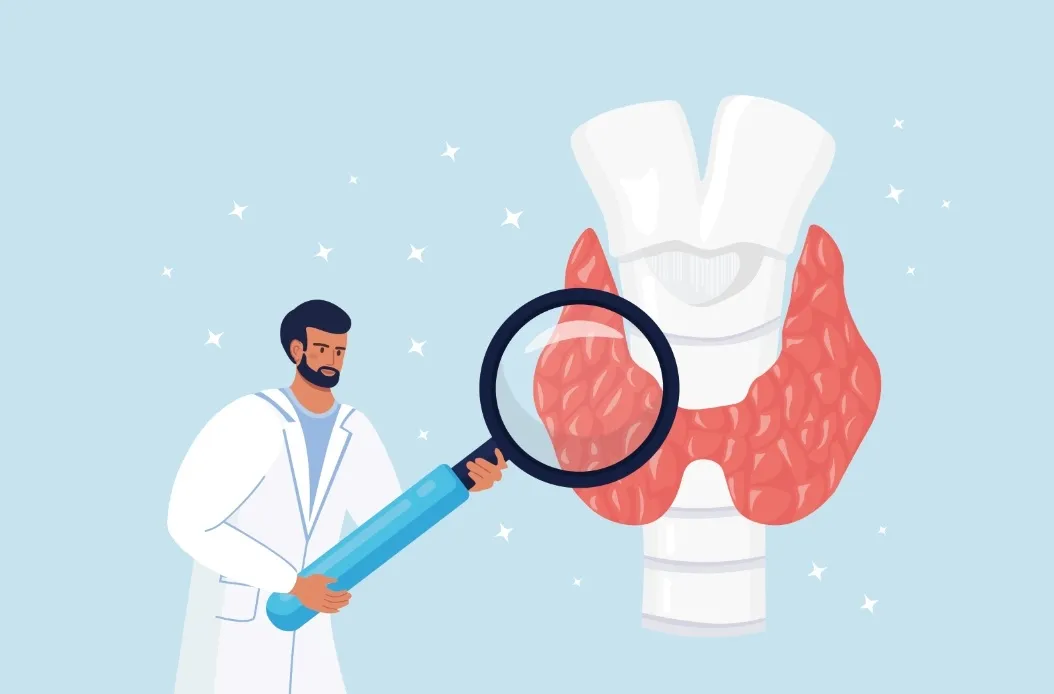 Ultrasound
: First-line imaging to assess size, shape, blood flow, calcification, and lymph nodes.
Fine-Needle Aspiration (FNA) Biopsy: Gold standard to confirm malignancy.
Who needs FNA?
Nodules ≥1 cm
History of head/neck radiation
Family history of medullary thyroid cancer or MEN2
Age <20 or >70
Rapid growth, hard texture, unclear margins
Enlarged lymph nodes or symptoms (hoarseness, dysphagia, dyspnea)
All adults should undergo annual thyroid ultrasound, regardless of risk.
Are Nodules Caused by Anger?
While stress doesn’t directly cause nodules, chronic
anger, anxiety, or depression may disrupt hormones and thyroid function, raising nodule risks. Other factors include:
Genetics: Family history of thyroid disease.
Autoimmunity: Hashimoto’s thyroiditis.
Iodine imbalance: Excess or deficiency.
Radiation exposure: Damages thyroid cells.
A Wake-Up Call, Not a Death Sentence
Thyroid nodules are rarely catastrophic but serve as a
call to action for proactive health management:
Consult specialists: Rule out malignancy.
Monitor regularly: Track changes via imaging.
Optimize lifestyle: Manage stress, balance iodine, avoid radiation.
Early detection + timely care = Better outcomes.
Your thyroid health is in your hands—act wisely!