-
-
-
400-685-8537

source: 仁树医疗 2026-05-18 13:34:20 Secondary reading
In the early hours, 45-year-old Ms. Zhao was once again jolted awake by her own snoring. She lay in the dark, mouth dry, heart racing slightly, head thick and foggy. Her bed partner turned over and mumbled, “Your snoring is even louder than mine now…” Ms. Zhao began to wonder: How did I start snoring? Does this just happen with age?
Many women feel that snoring is “embarrassing.” Deep down, snoring carries labels like “unladylike,” “crude,” or “masculine.” For those who never snored before, suddenly starting to snore is even harder to accept.
But snoring is a medical issue, just as a cold brings a cough. It is not because you are ungraceful or unrefined, and putting off addressing it only harms your health.
The real culprit is estrogen — the hormone that shifts throughout a woman’s life and quietly retreats at menopause.
Estrogen:
The Overlooked “Breathing Guardian”
01
Many people think snoring is a man’s problem — what does it have to do with women? The reason women often don’t snore is that they have a natural protective umbrella: estrogen.
Estrogen is not only the key hormone maintaining female physiological characteristics, but also acts as a “natural scaffold” for the upper airway muscles. It maintains pharyngeal muscle tone, keeping the airway stable and open during sleep. With it in place, the pharyngeal muscles won’t “collapse” during sleep.
Before menopause
Protection present → Airway stable → No snoring
After menopause
Estrogen levels drop precipitously, withdrawing this “protective umbrella” → Pharyngeal muscles become lax → Easily collapse and narrow during sleep → Airflow is obstructed → Snoring appears
That’s why many women who never snored when they were younger start snoring louder and louder after around age 45.
A 2022 European population study published in PLoS ONE confirmed this link: the study included 774 women aged 40–67 and showed that for every doubling of estrogen (estrone) and progesterone levels, the odds of snoring decreased by 19% and 9%, respectively. In other words, the lower the hormone levels, the higher the risk of snoring.
Female Snoring:
More Dangerous and More Subtle Than in Men
02
Some may say: “So what if we snore? Men have been noisy for so long — what’s wrong with our turn?”
But snoring is not as simple as “bothering others.” The health risks it carries are far more serious than you might imagine.
A study published in the journal Circulation showed that women with moderate-to-severe obstructive sleep apnea (OSA) had nearly a threefold higher risk of cardiovascular death compared with healthy women — women are disproportionately affected compared with men.
Another set of figures is just as striking: the prevalence of OSA among women aged 30–49 is about 9%, but jumps to 28% after age 50 — an increase of over 200%. In men, the increase over the same period is only 60%.
Three Major Health Risks
Increased cardiovascular disease risk
Heavy snoring is often accompanied by sleep apnea. During sleep, the airway is repeatedly blocked, subjecting the body to cycles of oxygen deprivation. This repeated pattern of “hypoxia-reoxygenation” places enormous stress on the cardiovascular system.
Over time, this can lead to higher blood pressure, increased cardiac workload, and a greater risk of hypertension, heart disease, and stroke.
Metabolic problems
The sleep fragmentation and intermittent hypoxia caused by snoring disrupt normal endocrine function.
This can lead to insulin resistance — the body’s cells become less responsive to insulin, weakening blood sugar control. In the long term, it may worsen impaired glucose tolerance and dyslipidemia, all of which are risk factors for type 2 diabetes and other metabolic diseases.
Decline in sleep quality
Snoring is more than just “making noise.” It often means frequent sleep disruption, especially when sleep apnea is involved. The result: you sleep through the night but wake up feeling as if you haven’t slept at all — experiencing daytime drowsiness, poor concentration, and mood swings.
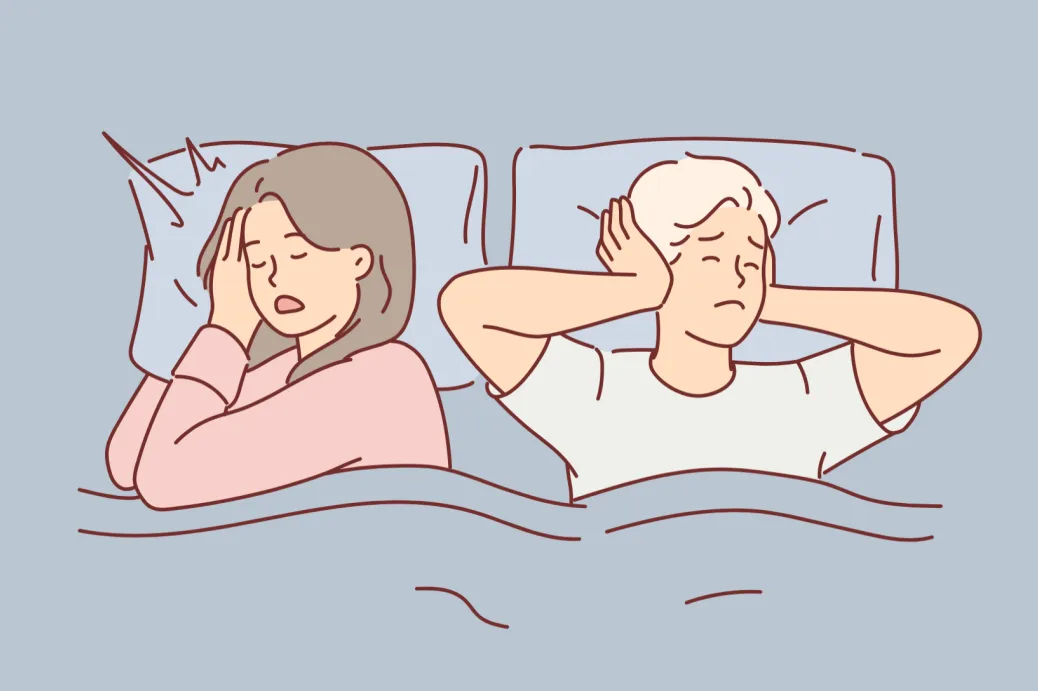
Greater risk for women
Female snoring is more harmful to health than male snoring, significantly increasing the risk of conditions such as hypertension, coronary heart disease, stroke, and diabetes.
The hormonal changes that come with menopause not only drive a sharp rise in snoring problems in women but also expose them to more severe health threats than men.
Even more worrying is that symptoms of female snoring are often more subtle and more easily overlooked. In addition to the typical signs — nighttime snoring, breathing pauses, and waking up gasping — women may also experience:
Marked mood swings: irritability, anxiety, depression
Endocrine disorders: irregular periods, prolonged menstrual bleeding, infertility
Accelerated aging: sagging skin, increased wrinkles, dull complexion
Many women don’t realize that the root cause of these seemingly unrelated problems can be repeated oxygen deprivation during the night.
Stratified Treatment:
No “One-Size-Fits-All” — Therapy Based on Severity
03
Menopausal snoring is not something you “just have to put up with.” Treatment needs to be tailored according to severity.
Step 1: Determine the severity
Before deciding on treatment, a sleep study is needed. This is the “gold standard” for assessing snoring severity and can tell you whether it is simple snoring or if sleep apnea has already developed.
Step 2: Choose a treatment plan based on severity
Mild cases (occasional snoring, no significant oxygen desaturation):
Sleep on your side: Reduces the tongue from falling back; many people find their snoring significantly decreases when sleeping on their side.
Pharyngeal muscle exercises: Daily exercises such as opening the mouth, sticking out the tongue, and lifting the tip of the tongue can strengthen pharyngeal muscles.
Weight control: Fat accumulation in the neck compresses the airway; weight loss is one of the most effective interventions.
Moderate-to-severe cases (frequent snoring, with nighttime gasping arousals and daytime sleepiness):
PAP (Positive Airway Pressure) therapy: Worn during sleep, it uses continuous positive airflow to splint the collapsed airway open. This is currently the first-line treatment for moderate-to-severe sleep apnea — non-invasive and effective.
Surgical intervention: For clearly identified sites of upper airway narrowing (such as a deviated nasal septum or enlarged tonsils), surgery may be considered to remove the obstruction.
Note: It’s not about the most expensive solution, but the one best suited to you. Always choose the appropriate treatment under a doctor’s guidance.
Menopause itself is already challenging enough. Hot flashes, insomnia, mood swings… the body is undergoing a massive adjustment. Don’t let snoring quietly steal away your sleep and health.
If you — or a woman close to you — start snoring after menopause, consider getting a professional evaluation.
After all, good sleep is what truly keeps you feeling and looking young.