-
-
-
400-685-8537

source: 仁树医疗 2026-03-20 13:04:32 Secondary reading
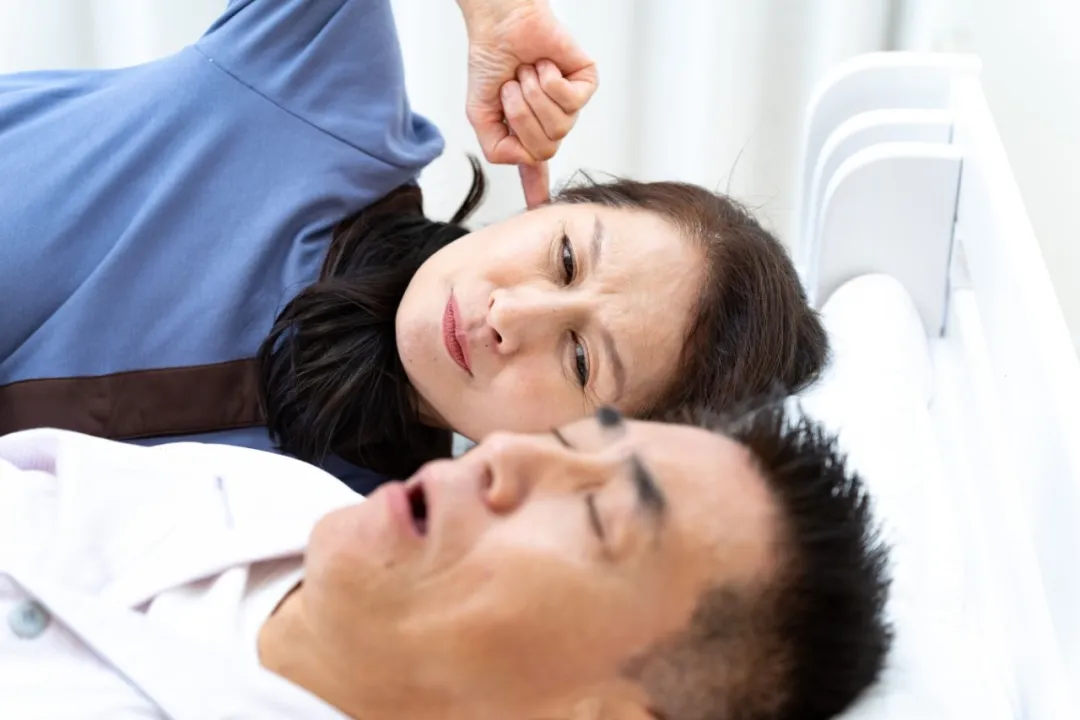
Is there someone around you who seems to "fall asleep the moment their head hits the pillow"?
As soon as their head touches the pillow, the snoring begins instantly and continues unabated all night long.
You resign yourself to putting in earplugs, and maybe a flicker of envy crosses your mind:
"Wow, they sleep so soundly…"
But did you know? That thunderous snoring might not be a sign of deep slumber,
but rather an alarm for nighttime "suffocation"—
Obstructive Sleep Apnea (OSA) is stealthily stealing their health!
Snoring ≠ Sound Sleep, It's the Struggle to Breathe
Many people believe snoring is a sign of being in a deep sleep, but the opposite is true. It's an invisible "suffocation" that is robbing you of your overall health.
Let's briefly understand how snoring happens: When airflow passes through narrow, relaxed upper airways (such as the throat or soft palate areas), it causes the tissues to vibrate, producing the sound we know as snoring. It's not the background music of peaceful sleep; it's an alarm signaling airway obstruction.
Of course, not all snoring is cause for concern:
Benign Snoring: The snoring is regular and consistent, with no pauses in breathing. It has a minor impact on the body and is often seen after fatigue or alcohol consumption.
Pathological Snoring (OSA): The snoring is loud and irregular, accompanied by noticeable breathing pauses, gasping for air, and sudden awakenings with a choking sensation. This is the real culprit we need to be highly vigilant against—snoring disorder, medically termed "Obstructive Sleep Apnea."
What happens to the body when a person experiences repeated pauses in breathing during the night?
Step One: Nighttime Hypoxia. Breathing pauses cause a sharp drop in blood oxygen saturation. Sensing the danger, the brain forcibly "awakens" the body (even if you aren't consciously aware), disrupting your sleep architecture and preventing you from entering deep, restorative sleep. This is why many people sleep all night yet still feel exhausted during the day.
Step Two: The "Cardiovascular System Assault." Repeated hypoxia stimulates the sympathetic nervous system, keeping it in a constant state of alert and causing persistently high blood pressure. Long-term hypoxia and blood pressure fluctuations accelerate atherosclerosis, significantly increasing the risk of acute events like myocardial infarction and stroke.
According to data released by the Chinese Sleep Research Society, about 30% of the population in China suffers from sleep disorders. The prevalence of obstructive sleep apnea is approximately 4%-5%, and this rate increases significantly with age. Even more concerning is that about 50% of OSA patients also have hypertension, and those with severe OSA have more than three times the risk of stroke compared to the general population.
Desperate for a Cure? You Might Be Falling into These Three Snoring Treatment Traps!
More and more people are recognizing the importance of treating snoring and try various methods: anti-snoring strips, anti-snoring clips, trendy mouthpieces, even buying CPAP machines online… They spend a lot of money, but the snoring persists. Why is that?
✗ Myth 1: Blind Treatment – Buying "Miracle Cures" Without a Systematic Evaluation
"My nose is stuffy, I'll buy an anti-snoring strip!" "I heard anti-snoring clips work, let me try one!" This is the most common misconception. Many people think snoring is just a minor issue with the nose or throat and impulsively buy various trendy anti-snoring products.
The Truth: The root cause of snoring lies in the narrowing or collapse of one or multiple levels of the upper airway. It could be in the nasal cavity (deviated septum, turbinate hypertrophy), the oropharynx (enlarged tonsils, elongated soft palate), or the laryngopharynx (enlarged tongue base). Without a professional examination to pinpoint the exact location of the obstruction, blindly using anti-snoring strips, clips, or mouthpieces is like "treating a headache when the problem is the foot." These products might temporarily alter airflow but cannot solve the underlying structural problem. They offer a temporary fix, and the snoring soon returns.
✗ Myth 2: Buying a CPAP Machine Online Without Professional Guidance – A Waste of Money
"I heard CPAP machines can treat snoring, so I bought one online myself." This is another common pitfall.
The Truth: While a CPAP machine (non-invasive positive airway pressure) is indeed the gold standard treatment for moderate to severe OSA, it must be professionally calibrated based on the patient's specific pressure requirements. The therapeutic pressure needed varies for each individual, and the type of mask and mode also differ from person to person. Buying one without undergoing a sleep study often results in either insufficient pressure (ineffective) or excessive pressure (uncomfortable, causing leaks and a feeling of suffocation). The likely outcome is that it's used for a few days and then abandoned, left to gather dust in a corner.
✗ Myth 3: Over-Reliance on Anti-Snoring Gadgets – Temporary Relief, Then Back to Square One
From anti-snoring sprays and pillows to various so-called "snoring stopper tips" and "snoring tongue retainers," a bewildering array of gadgets floods the market. Many people buy them with a "let's give it a try" attitude. They might seem to work for the first day or two, but soon the snoring returns, possibly even causing oral discomfort or disrupting sleep architecture due to improper use.
The Truth: Most of these "gadgets" lack rigorous clinical validation. They might temporarily reduce snoring through physical stimulation or by altering sleeping position, but they cannot correct pre-existing anatomical narrowings or neuromuscular control abnormalities in the upper airway. Once the body adapts or use is discontinued, the snoring returns. They might offer some relief for occasional fatigue-related snoring, but for genuine OSA patients, they are utterly inadequate.
Say Goodbye to the "Silent Killer," Find Your Peaceful Breath Again
After stumbling through these pitfalls, it becomes clear: The correct first step in treating snoring is not buying a product, but seeing a doctor.
Suspect you have Obstructive Sleep Apnea? Here's the proper procedure:
#1
Consult an ENT Specialist
An Ear, Nose, and Throat (ENT) doctor will conduct a detailed interview and examination to initially determine if there are structural issues in the upper airway, such as a deviated septum, enlarged tonsils, elongated soft palate, or enlarged tongue base.
#2
Undergo a Professional Sleep Study
A sleep study is the "gold standard" for diagnosing OSA. By monitoring indicators like blood oxygen levels, breathing patterns, and brain waves throughout the night, it precisely assesses the severity of the apnea. Home sleep tests are now available, making the process convenient and quick.
#3
Develop a Personalized Treatment Plan Based on Diagnosis
With a clear diagnostic report, the doctor will recommend the most appropriate treatment path based on your specific situation—the location and severity of the obstruction, and your overall health condition—rather than having you buy things randomly online.
At RENSHU, whether it's an oral appliance, CPAP machine, chronic disease management, or a surgical option, we can precisely match you with the right solution. Every step, from diagnosis to intervention, is evidence-based. Choose RENSHU, and let true grace begin with a worry-free sleep.