A recent video shared by a well-known host on social media has drawn widespread attention: both of her children were diagnosed with amblyopia. Fortunately, due to early detection, the children are currently in the process of recovery.
In the video, she explained that her daughter's condition was flagged during a routine check-up by an ophthalmology organization cooperating with her kindergarten, and later confirmed by a professional hospital. Her son was found to have the same condition during an active eye examination after he turned three.
Dr. Cao says: "Treating amblyopia is a 'vision battle' against the clock. Scientific intervention during the critical period of visual development (ages 3-6) is essential to prevent children from missing out on a clear future due to a 'lazy' eye."
To help more parents pay attention to their children's eye health earlier, let's talk about amblyopia today.
01. The Neglected "Lazy Eye": What is Amblyopia?
Does your child often squint to see things? Tilt their head to watch TV? Or frequently complain about not seeing the blackboard clearly?
Behind these behaviors might be more than just common vision issues. Amblyopia, often called a "lazy eye," is not a problem with the eye itself, but with the brain. It occurs when the development of the visual system is disrupted during its critical period (typically from birth to age 8).
Amblyopia is medically defined as:
During the developmental stage of the visual system, due to insufficient visual stimulation or abnormal eye function, the best-corrected visual acuity in one or both eyes is lower than the normal standard for the same age group, with no organic disease present in the eyes.
Specifically, normal visual acuity for children aged 3-5 should be ≥0.5 (20/40), and ≥0.7 (20/30) for children over 6. If the visual acuity difference between the two eyes is two lines or more on an eye chart, the eye with lower vision is considered amblyopic.
02. Parental Confusion: Why Does My Child Have Amblyopia?
Amblyopia is not a genetic disease, but its occurrence often has identifiable causes.
Main causes include moderate to high refractive errors (myopia, hyperopia, astigmatism), anisometropia (a significant difference in refractive power between the two eyes), strabismus (misaligned eyes), and form deprivation (e.g., congenital cataract, corneal opacity, severe ptosis).
Important Note
Amblyopia is a developmental disorder, and its treatment is time-sensitive. Once the sensitive period for visual development (typically before age 8) is missed, the effectiveness of treatment decreases significantly and may even become irreversible.
03. The Risk Behind the Numbers: Standards Parents Should Know
Many parents believe that children only need vision checks when they start school and use their eyes more. This is a common misconception.
Visual development has a critical period, and amblyopia screening and treatment also have a "golden window."
According to the Chinese Journal of Ophthalmology clinical guidelines, visual acuity development standards differ for children of different ages: Normal vision for a 3-year-old is generally around 0.5 (20/40); it can reach 0.6-0.8 (20/30-20/25) by age 4; and should be 0.8-1.0 (20/25-20/20) by age 5 and above.
If your child's corrected visual acuity is below these age standards, or if you notice your child:
Frequently squints or tilts their head to see things
Skips lines easily while reading
Has poor judgment of distance
Occasionally has one eye that "drifts" outward or inward
Dislikes activities requiring hand-eye coordination
...then a professional eye examination is essential. The earlier amblyopia is detected, the better the treatment outcome.
04. Seizing the Golden Period for Amblyopia Treatment: Why is a 3-Year-Old Check-up Important?
"My child is so young, do they really need an eye check?" This is many parents' first reaction. Actually, the opposite is true. Precisely because young children cannot express themselves well, check-ups are even more necessary.
This host's experience reminds all parents: Children should undergo a comprehensive eye examination after age 3 and establish a refractive development file.
Three-year-olds can cooperate with most basic eye examinations. Amblyopia discovered at this age is within the optimal treatment window.
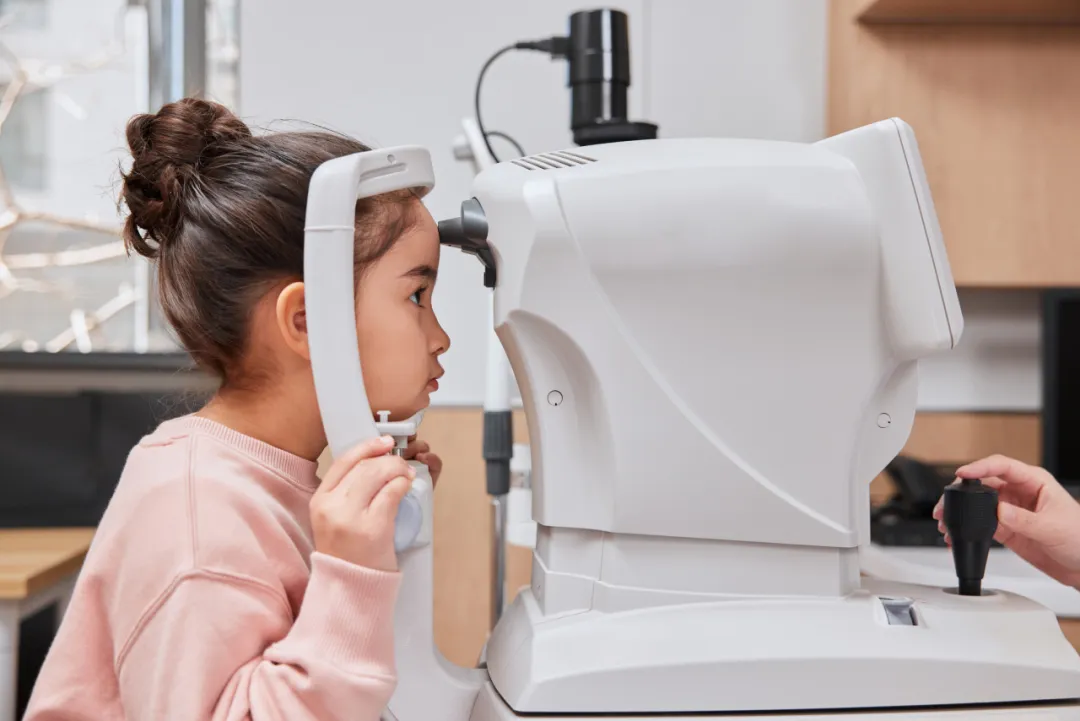
Routine screening should include visual acuity testing, refraction assessment, eye alignment check, and stereopsis (depth perception) evaluation. The entire process is painless and non-invasive, and children can fully cooperate.
Even if amblyopia is diagnosed, parents need not be overly anxious. Modern medicine offers very mature treatments for amblyopia.
Prescribing appropriate glasses, occlusion therapy (patching the stronger eye to force the brain to use the amblyopic eye), or visual training with specific devices are all time-tested and effective treatment methods.
05. Home Support: 5 Things You Can Do Every Day
Amblyopia treatment is a "marathon" requiring patience and persistence, and it carries a certain recurrence rate, especially if treatment is incomplete or stopped too early. Therefore, integrating eye care habits into daily life is crucial.
1. Create a Good Visual Environment
Ensure indoor lighting is sufficient and even. Avoid letting children use their eyes in dim or glaring light. Supervise viewing distances; maintain a distance of 33-40 cm when reading or playing with toys.
2. Take Regular Breaks, Shift Focus
For every 20 minutes of near work, have your child look at a distant object (over 6 meters away) for at least 20 seconds. Distant greenery or buildings make great "visual rest stops."
3. Simple & Effective Home Visual Training
Stringing Beads: Progress from large to small holes to train hand-eye coordination.
Tracing: Trace along the outlines of patterns.
Catching & Throwing Balls: Gradually increase difficulty, moving from larger to smaller balls.
4. Adhere to Occlusion Therapy
If patching is recommended by the doctor, ensure both the duration and quality of patching. Prepare a few eye patches your child likes, or decorate them to make them fun, increasing cooperation.
5. Maintain a Positive Attitude
Amblyopia treatment may take months or even years. Offer more encouragement, less criticism, and celebrate every small improvement. A parent's steady emotional support is the greatest motivation for a child to persist.
Visual development has only one chance. And the key to that opportunity lies in the hands of every parent.
Don't wait until your child says they "can't see clearly" to act. Many children with amblyopia may never have experienced clear vision.
You can take your child for a comprehensive eye examination at age 3. This might be the most precious gift you give your child—a clear, bright, and complete world.