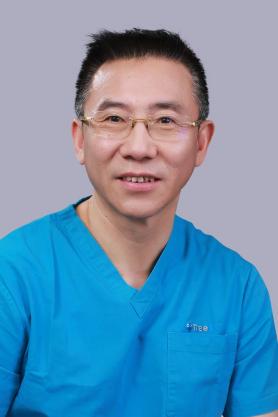
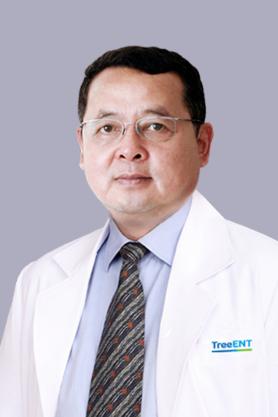
Many patients experience a recurrence of nasal congestion merely months after undergoing turbinate reduction surgery, despite initial relief. Have you found yourself caught in the cycle of "treatment – relief – recurrence"? Addressing this phenomenon, Dr. Chen Guangqiang, a rhinology specialist at Tree ENT & Ophthalmic Hospital, points out that postoperative recurrence is often related to achieving only a "false balance" in the nasal cavity. Failure to correct underlying structural issues, such as a deviated nasal septum, is key to the return of symptoms.

Dr. Chen Guangqiang, who completed advanced training at Stanford University Medical Center in the US, focuses on the latest international diagnostic and therapeutic techniques in rhinology, as well as nasal structure and functional reconstruction. He proposes that lasting nasal patency depends not solely on the state of the mucosa, but more crucially on the symmetry and stability of the bony framework. "For many patients, postoperative breathing improvement is only temporary because their nasal septum remains deviated. It's much like a road that is wide but misaligned – traffic efficiency remains poor."
Deviated Nasal Septum: An Underestimated Structural Cause
Dr. Chen further explains that a deviated nasal septum, particularly when it involves the nasal valve area, significantly impacts breathing efficiency. "During my training at Stanford, I delved into the relationship between nasal valve structure and airflow dynamics. This area is the narrowest part of the nasal passage; even a slight deviation here can cause a pronounced sensation of obstruction, a point often overlooked in routine examinations."
He emphasizes that merely addressing turbinate hypertrophy—the "superficial phenomenon"—without correcting the deviated septum—the "skeletal framework"—makes it difficult to achieve true balance in the nasal airway, inevitably leading to symptom recurrence.
From "False Balance" to "True Patency": Structural Correction as the Core
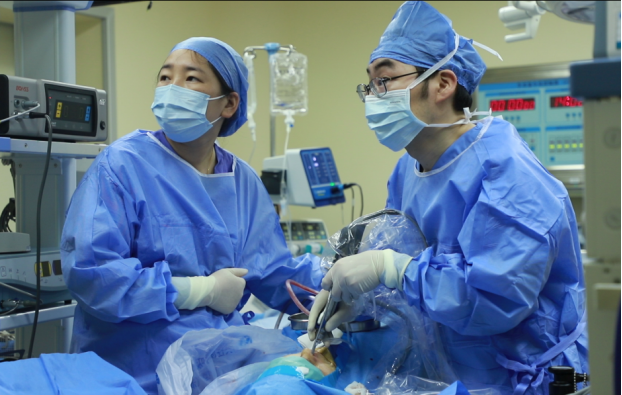
In clinical practice, Dr. Chen applies internationally advanced concepts of structural and functional integration to rhinological surgery. He stresses the importance of personalized assessment, advocating for correction of the nasal septum first, followed by precise adjustment of the turbinates. This approach aims to restore symmetrical nasal patency and smooth airflow.
"Benefiting from the learning experience at Stanford, our team places greater emphasis on preserving the mucosa and bony support during surgery. We employ minimally invasive techniques such as bone-preserving, packing-free methods, combined with new ventilation materials. This allows patients to resume autonomous breathing within one to two days postoperatively, significantly shortening the recovery period."
Advocating for Systematic Evaluation to Avoid Repeated Treatments
Dr. Chen recommends that patients suffering from chronic nasal congestion or postoperative recurrence undergo a comprehensive nasal structural assessment, including nasal endoscopy and imaging studies. "Respiratory health is a systemic project. Simply pursuing a 'wide' airway often addresses symptoms without curing the root cause. True patency stems from a functional balance where the structure is aligned and airflow is smooth."
At Tree ENT & Ophthalmic Hospital, Dr. Chen Guangqiang performs various nasal functional reconstruction surgeries (e.g., bone-preserving septoplasty for deviated septum, microdebrider-assisted polypectomy, minimally invasive balloon sinuplasty, etc.). His clinical pathway, integrating Chinese and international experience, offers new solutions for many patients with complex nasal obstruction.
Tree ENT & Ophthalmic Hospital is consistently dedicated to the clinical work and research of nasal ventilation dysfunction and structural diseases. The expert team has accumulated extensive experience in the fields of precise rhinological surgery and enhanced recovery. If you or a family member suffers from persistent, recurrent nasal congestion, it may be time to examine whether you are merely experiencing a "false balance" stage of relief. True respiratory freedom originates from deep structural symmetry.
Contact & Consultation
Service Hotline: 400 685 8537
Website: www.treeent.com
WeChat Official Account: atreeent