-
-
-
400-685-8537

source: 仁树医疗 2026-08-07 16:35:45 Secondary reading
A Letter to the Physician
Dear Doctor:
Hello! Today I want to write you a letter and say: Thank you!
In the past, I always felt utterly exhausted.
When I go to bed at night, Mom always says that I have a habit of keeping my mouth open and also snore. While I'm asleep, I suddenly wake up feeling suffocated for no apparent reason. When I get up in the morning, my mouth feels dry and scratchy, and even my throat hurts.
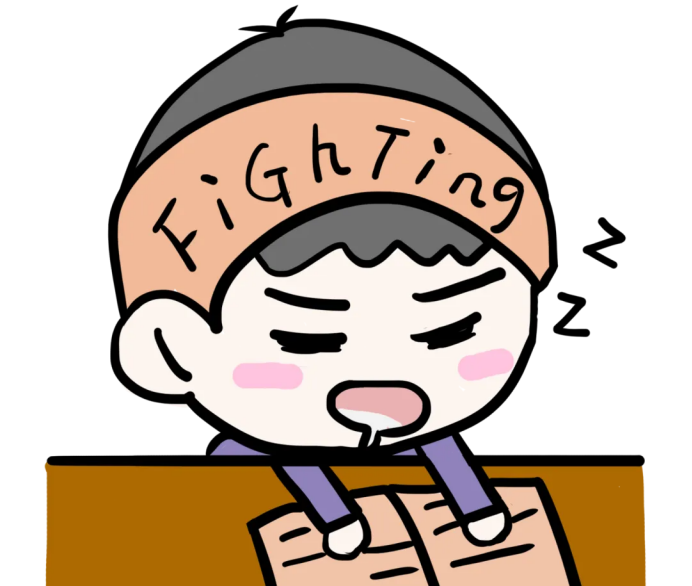
When I arrived at school, I really wanted to listen attentively to the teacher's lecture, but as I listened, drowsiness began to set in, and my eyelids felt so heavy that I couldn't lift them. My desk mate asked me with confusion: "Did you not sleep well last night?"
But I went to bed very early; I don't even know why this is happening.
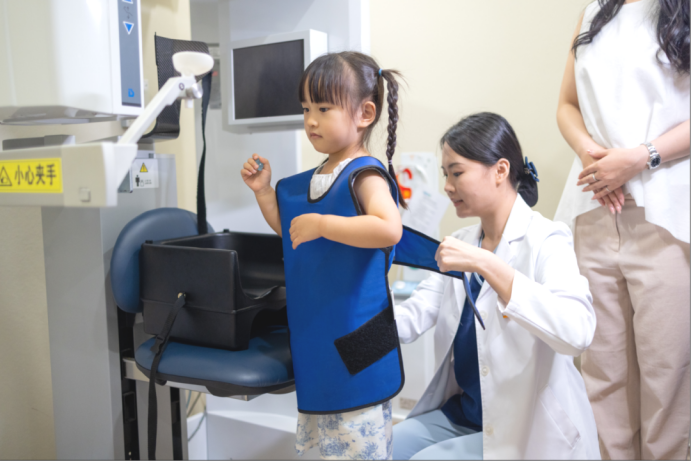
Later, my mother took me to the hospital for a doctor's examination. The doctor used a device equipped with a small light to carefully examine my nasal cavity, and then took a "nose scan" using a technology called CBCT—essentially, it is like a large 3D imaging camera; I simply sat still during the procedure, and it was completely painless. The resulting images were exceptionally clear, allowing me to see the "inner chambers" of my nose.
The doctor pointed at the photo and told me: "There's a small thing inside your nose that has grown slightly; it's called an adenoid. It's blocking your airway."
Oh—so it turns out my body had secretly fallen ill while I was sleeping.
When it was time for surgery, I was quite scared; I asked my mother, "Will it hurt a lot?"
Mom comforted me: "It won't happen; the doctor will protect you—you'll just sleep peacefully."
The doctor put on a small breathing mask for me, the nurse held my hand, and we chatted about my favorite cartoons. Before I could say a few more words, I fell fast asleep.
When I opened my eyes again, I was already lying on the small bed in the ward.
Something magical happened that night: the air was cool, gently slipping into my nose, allowing me to breathe comfortably without having to open my mouth.
It turns out that normal breathing is such a comfortable thing!
In the morning, I couldn't wait to run over and tell Mom: "Mom, Mom! I slept so soundly last night!" Mom held me and smiled for a long time.

Now, I am different from how I was before.
In class, my mind is no longer foggy; I can hear what the teacher is saying very clearly. When doing homework, I no longer feel like dozing off at any moment. During physical education class when running, I'm not as tired after just a few laps as I used to be.
Thank you, doctor! The feeling of breathing properly and sleeping well is truly wonderful!
—A little child who can finally breathe normally
The doctor wants to tell you
Hello little friend!
Seeing that you said "I feel very comfortable breathing," I'm truly happy for you.
I can see all the feelings you've described in your letter. You said, "I start feeling sleepy while listening to the lecture," "I'm gasping for air after just a few steps," and "my mouth is dry" —none of these are your fault; it's your body telling you: I'm short of oxygen! I need help!
Want to know why this happens? Let me explain it to you.
Q1: Why do you always feel sleepy?
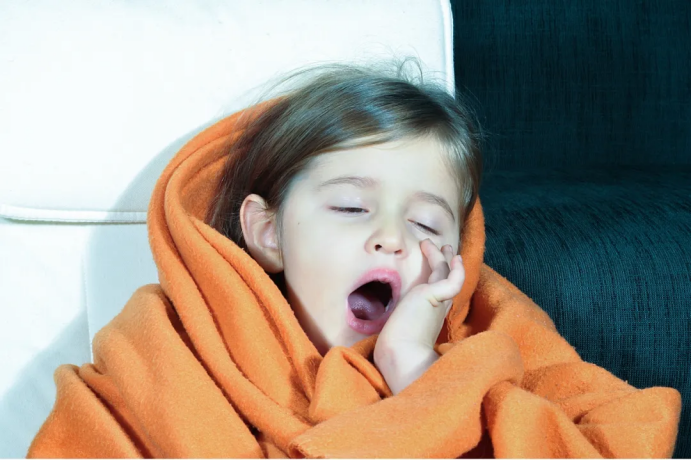
When you are sleeping, your body is actually not ceasing its functions; during deep sleep at night, it helps you grow taller, aids in retaining what you learned during the day, and helps you recover your energy.
However, adenoid hypertrophy can easily obstruct the airway when you lie down, causing you to feel a sense of tightness or "difficulty breathing"; your body will repeatedly pull you out of deep sleep, prompting you to change positions or turn over—all just to secure a little bit of air. You may not even notice this process at all, yet it disrupts your sleep repeatedly throughout the night, preventing your brain from getting adequate rest.
As a result, during the next class, my brain went on strike—it was truly exhausted.
Q2: Why is your mouth always dry?

Your nose acts like a built-in air conditioner for your body, warming, humidifying, and purifying the air you inhale. However, when your nose is blocked, you can only breathe through your mouth. Since the mouth lacks the ability to warm or humidify the air, throughout the night, airflow will directly blow against your throat, leaving your throat and oral cavity dry.
That's why you might feel a sore throat or a dry mouth in the morning—your mouth has been working hard to keep your nose dry all night.
Q3: Why do you get short of breath after just a few steps?

Prolonged nighttime hypoxia and poor sleep quality can consistently weaken your physical fitness and cardiopulmonary function.
Furthermore, if a person has developed long-term habitual mouth breathing and suffers from disrupted respiratory rhythm—meaning they no longer benefit from the moist regulatory effects of the nasal cavity—the air enters the respiratory tract directly without proper conditioning; since the body does not have time to adapt, it becomes very easy to experience shortness of breath or feel utterly exhausted during physical education classes, while running, or when performing jumping activities.
Q4: If you have difficulty breathing, what other problems could arise?

I'll tell you another secret: when it comes to adenoid issues, there are actually many chain reactions involved.
If you have trouble sleeping at night, your growth hormone cannot be secreted normally. Normally, this hormone should help you grow taller while you are asleep; however, if you keep tossing and turning throughout the entire night, it won't get the chance to start its secretion process, which may result in you being shorter than your peers.
When you have fragmented sleep at night, your brain cannot properly process or store the knowledge acquired during the day, which can impair both your memory and concentration.
Furthermore, prolonged mouth breathing causes the mouth to remain open, the tongue to be positioned incorrectly, leading to the upper lip gradually protruding, misaligned teeth, and a chin that retracts backward; as a result, the overall shape of the face gradually changes—this is what adults commonly refer to as the "adenoid facies." Once the facial skeleton has reached its final form, attempting corrective treatment later on becomes extremely challenging.
Therefore, detecting issues early and addressing them promptly is the best way to protect you.
Here's some good news for you:
Modern adenoidectomy differs significantly from traditional methods. Surgeons now utilize low-temperature plasma minimally invasive technology—akin to a very thin "micro-suction tube" —to precisely remove the adenoids obstructing the nasal passage without damaging adjacent healthy tissues, resulting in minimal bleeding and rapid recovery.
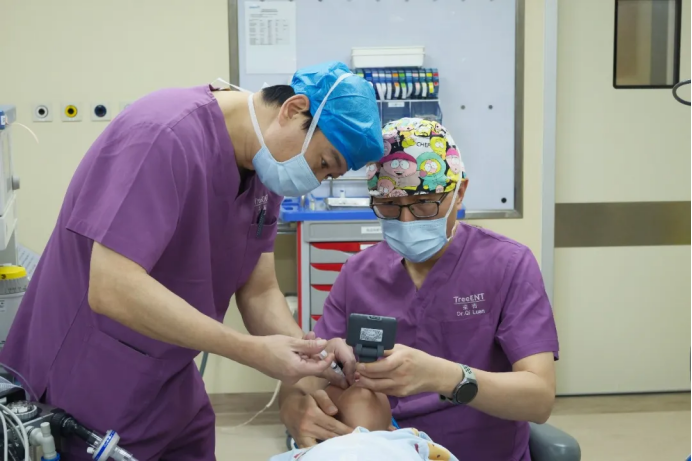
At Renshu Ophthalmology, ENT Department, such surgical procedures are not only performed by highly experienced specialist surgeons but also supported throughout the entire process by a dual anesthesiology team, which precisely controls the depth of anesthesia and continuously monitors vital signs—including heart rate, blood pressure, and blood oxygen saturation—in real time. The anesthetic agents used are imported, offering smoother onset and faster metabolism, thereby effectively reducing postoperative nausea and vomiting, ensuring you regain consciousness with greater clarity and comfort.
As you wrote in your letter: "It's different from before." Soon, you will be able to breathe normally through your nose again, return to class to listen attentively, and run and play freely with your friends.
The final few words are addressed to parents who are currently torn and hesitant:
If your child exhibits any of the following signs, you should pay close attention:
Snoring during sleep, mouth breathing, and occasional waking up at night due to suffocation;
Morning: dry mouth and recurrent throat discomfort;
During the day, one may experience frequent drowsiness, become distracted in class, or struggle to sit still;
Lack of interest in physical activity; even slight exercise can cause shortness of breath and fatigue;
Height growth is relatively slow, and abnormalities in jaw and tooth development have already occurred.
It is recommended to take your child to the otolaryngology department for a nasal endoscopy and CBCT examination to determine the severity of adenoid obstruction, after which the doctor will conduct a comprehensive evaluation to develop an appropriate intervention plan.
Children's "lack of focus," "lack of motivation to move," and "failure to grow taller."
The root cause may not lie in attitude, but in breathing.
Early detection, early assessment, and early intervention
Breathing properly is something every child deserves.