-
-
-
400-685-8537

source: 仁树医疗 2026-07-06 15:51:53 Secondary reading
The World Cup in the United States, Canada, and Mexico is in full swing, with the world's eyes fixed on the pitch, eager to see teams break through goals and lift the coveted trophy.
Yet, in many people's nasal passages, a grueling endurance match is playing out simultaneously: nasal polyps that keep returning after surgery—removed, recurrent, removed again, and recurrent again—relentlessly racking up a frustrating "hat-trick."
01 Surgery Scores a Goal, but the Match Is Far from Over
After nasal polyp surgery, the nose clears, the sense of smell returns, and breathing becomes easy—like a striker finding the back of the net, sending the crowd into cheers.
But many patients mistakenly believe that surgery equals total victory. In reality, it's just one goal scored; the true battle has only just begun.
Surgery can only remove visible polyps—much like plucking ripe fruit from a branch. But the "soil" that breeds polyps—the chronic inflammation lingering in the nasal cavity—remains completely untouched, still rooted deep in the mucosa.
The underlying triggers of polyp formation never truly go away, and the seeds of recurrence are already sown.
02 The Opponent Strikes Back: Why Do Polyps Score a "Brace"?
Surgery can remove what's visible, but it cannot remove the inflammatory environment in the nasal cavity.
Under high-definition endoscopy, nasal polyps resemble clusters of grapes clinging to the nasal mucosa. Removing the "grapes" is straightforward, but as long as the inflamed "soil" continues to stimulate the area, new polyps will soon regrow.
Many patients feel better after surgery and let their guard down, believing the procedure was a one-time fix. Yet, months or a year or two later, nasal congestion returns, the sense of smell fades again, and symptoms may even be worse than before—the polyps truly have scored a "brace."
This is not a surgical failure. The root cause is that nasal polyps don't arise from nowhere—they need a persistent inflammatory environment to "feed" them. As long as that environment persists, polyps are likely to grow back.
03 Symptoms in Rotation: Nasal Polyps Are Not a Solo Act
Even more troublesome is that nasal polyps never fight alone.
More challenging than recurrence itself is the fact that associated conditions can flare up in succession—like players making overlapping runs on the pitch, attacking from all angles and catching you off guard.
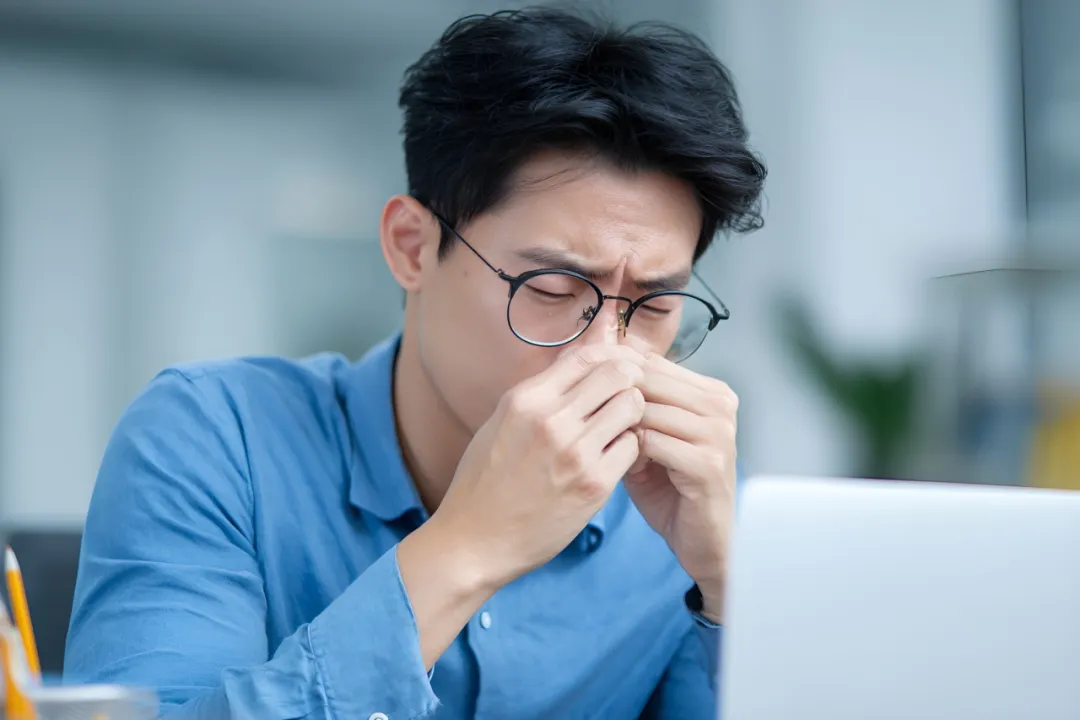
Some patients have nasal passages that open up post-surgery but then suffer from frequent headaches. Once the headaches subside, chest tightness and coughing emerge. Discomfort in the nose, head, and respiratory tract strikes in turn, taking a heavy toll on both body and mind.
This is no coincidence. Nasal polyps, allergic rhinitis, and asthma share a common disease driver—type 2 inflammation. Like a team's tactical core, it simultaneously invades both the upper and lower respiratory tracts, affecting the entire system.
Many patients with chronic coughing and chest tightness dismiss it as a routine airway issue—only to realize, after a postoperative asthma flare-up, that the nasal and pulmonary conditions stem from the same root.
The following groups should be especially vigilant:
Those with severe symptoms that significantly impact daily life and work, especially long-term loss of smell
Those who have undergone multiple polyp surgeries but still experience recurrence
Those with concurrent lower respiratory conditions such as asthma or allergic rhinitis
If you fit any of these criteria, it is highly likely that your nose harbors more than just "a bit of growth"—a persistent systemic immune response may be driving the condition from behind the scenes.
04 Identifying the Mastermind: The Stubborn Type 2 Inflammation
The "mastermind" behind recurrent nasal polyps is type 2 inflammation.
This is not a bacterial or viral infection, but rather a complete "tactical system"—one that transmits inflammatory signals via cytokines such as interleukin-4, interleukin-5, and interleukin-13, inducing massive accumulation of eosinophils in the nasal mucosa, continuously fueling polyp formation and causing repeated recurrences.
How can you tell if type 2 inflammation is active? One key indicator in routine blood work is the eosinophil count.
If this value exceeds 150 cells/μL, it indicates that type 2 inflammation is in an active state and is a major driver of frequent polyp recurrence.
Eosinophils are immune cells that normally help defend against parasites. However, under type 2 inflammatory stimulation, they become abnormally activated, massively accumulating in the nasal cavity, releasing harmful substances that damage the mucosa, and constantly nourishing polyp growth. The higher this count, the more stubborn the inflammation, and the recurrence risk multiplies accordingly.
Nasal congestion, headaches, and cough-related discomfort stack on top of one another—a protracted war of attrition that cannot be relieved by sheer endurance alone.
05 Holding the Line: Long-Term Postoperative Management Is the True "Defense"
Once surgery is done and the nose is clear, it does not mean you can breathe easy. The real "defense" starts from day one after surgery.
Standardized medication: If you do not adhere to medication after surgery, inflammation will quickly return. Regular use of intranasal corticosteroids and routine nasal irrigation are the first line of defense against recurrence.
Regular follow-up: Many patients feel better after surgery and skip follow-up visits, only rushing back when congestion returns and smell disappears—by which time polyps have often grown to a size requiring another surgery. The value of regular follow-up lies in detecting and addressing polyps early, when they are just beginning to emerge.
Biologics when necessary: For patients with active type 2 inflammation and high recurrence risk, biologics can precisely neutralize pathogenic factors such as interleukin-4 and interleukin-13, blocking inflammatory signals at the source, depriving polyps of the conditions needed for growth, and breaking the cycle of "remove–recur."
Long-term management—securing a state of "no recurrence"—is what truly counts as a win.
Surgery is just scoring one goal. What truly decides the outcome is the defense—
long-term disease management, and targeting type 2 inflammation as the "core player."
Put an end to years of nasal polyps' "hat-trick."
This years-long tug-of-war—it's time for you to strike back!